NASA’s 2026 Mission Objectives: National Implications for Space Exploration
Advertisements
NASA’s 2026 mission objectives are strategically designed to expand human presence in space, foster scientific discovery, and yield significant national implications for the United States across economic, technological, and geopolitical landscapes.
As the year 2026 draws near, the world looks to the stars, anticipating the next giant leaps in space exploration. NASA’s 2026 mission objectives represent a pivotal moment, shaping not only the future of our understanding of the cosmos but also carrying profound national implications for the United States, impacting everything from technological innovation to global leadership. These ambitious endeavors are more than just scientific pursuits; they are strategic investments in the nation’s prosperity and security.
The Artemis Program: A Return to the Moon and Beyond
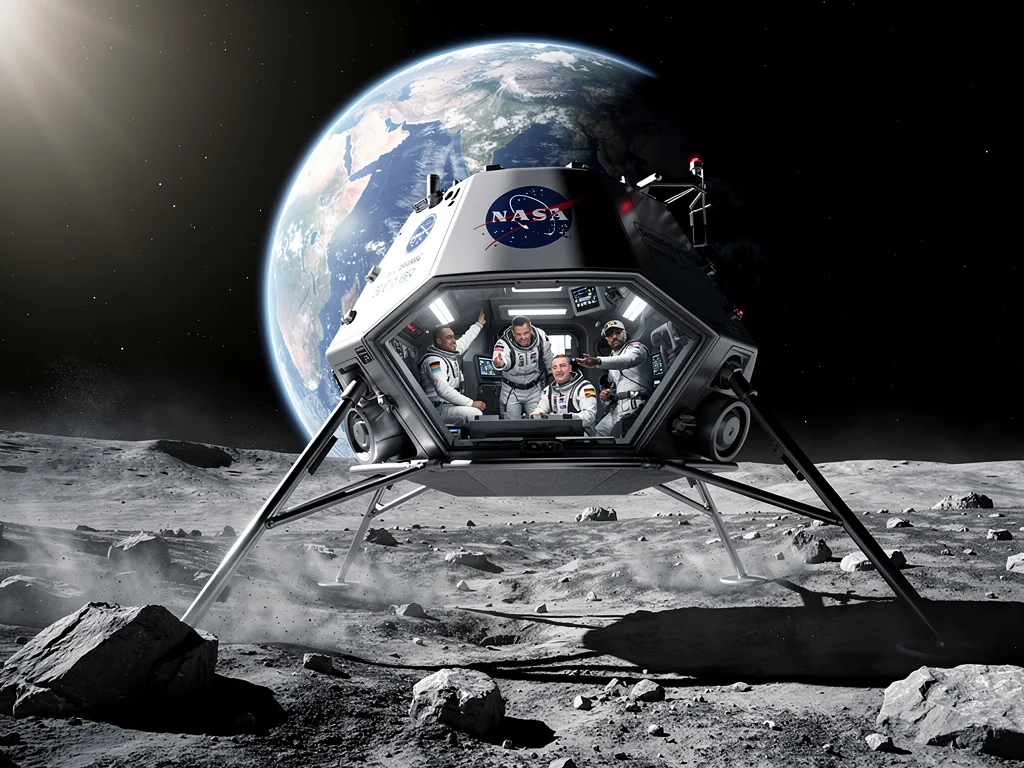
NASA’s Artemis program stands at the forefront of its 2026 objectives, aiming to return humans to the lunar surface for the first time in over half a century. This initiative is not merely about planting a flag; it’s about establishing a sustainable human presence on the Moon, paving the way for future deep-space missions, particularly to Mars.
The 2026 timeline is critical for several key phases of Artemis. These missions will involve advanced landers, new lunar habitats, and expanded scientific research capabilities. The goal is to learn how to live and work on another celestial body, extracting resources and developing technologies that will be essential for longer-duration space travel.
Artemis III and Lunar Infrastructure
While specific mission dates can shift, 2026 is projected to be a period of intense activity for the Artemis program, potentially including the critical Artemis III mission which aims to land astronauts near the lunar South Pole. This region is of particular interest due to the potential presence of water ice, a vital resource for life support and fuel production.
- Human Landing System (HLS) Development: Continued testing and deployment of commercial HLS vehicles, crucial for transporting astronauts to and from the lunar surface.
- Gateway Lunar Outpost: Further assembly and operational readiness of the Gateway, a small space station orbiting the Moon, serving as a staging point for lunar and deep-space missions.
- Lunar Surface Operations: Planning and early deployment of infrastructure for sustained human presence, including power systems, communication networks, and mobility systems.
- Scientific Payloads: Integration of advanced scientific instruments to conduct unprecedented research on lunar geology, astrophysics, and the potential for extraterrestrial life.
The establishment of a permanent lunar presence through Artemis will demonstrate America’s technological prowess and commitment to leading international space efforts. It also sets the stage for collaborative ventures with global partners, sharing the risks and rewards of this monumental undertaking.
Advancing Mars Exploration and Robotic Missions
Beyond the Moon, NASA’s 2026 objectives continue to push the boundaries of Mars exploration. While human missions to Mars are still decades away, robotic missions play a crucial role in gathering data, testing technologies, and preparing for future human endeavors. The ongoing Mars Sample Return campaign is a cornerstone of these efforts.
The year 2026 will see continued progress in the ambitious Mars Sample Return campaign, a multi-mission effort to bring Martian rock and soil samples back to Earth for detailed scientific analysis. This endeavor involves collaboration between NASA and the European Space Agency (ESA), combining the expertise of both agencies to achieve an unprecedented scientific feat.
Mars Sample Return Campaign Progress
The Perseverance rover, already collecting samples on Mars, is a vital component of this mission. By 2026, subsequent missions designed to retrieve these samples and launch them into orbit around Mars will be well underway or nearing launch. This complex operation requires precision engineering and innovative approaches to planetary protection.
- Sample Fetch Rover (SFR) Deployment: Potential launch or deployment of the SFR to collect samples cached by Perseverance.
- Mars Ascent Vehicle (MAV) Development: Continued testing and refinement of the MAV, which will launch the collected samples from the Martian surface into orbit.
- Earth Return Orbiter (ERO) Operations: Preparation for the ERO to capture the MAV’s payload in Mars orbit and transport it back to Earth.
- Planetary Protection Protocols: Stringent measures to prevent contamination of Earth with potential Martian biological material and vice-versa, ensuring the integrity of scientific results.
The scientific insights gained from these Martian samples could revolutionize our understanding of the Red Planet’s geological history, potential for past or present life, and the evolution of planetary systems. This knowledge is invaluable for informing future human missions and understanding our place in the universe.
National Security and Geopolitical Implications
Space exploration, particularly ambitious endeavors like NASA’s 2026 objectives, extends far beyond scientific curiosity. It has profound national security and geopolitical implications, influencing a nation’s standing on the global stage and its ability to project power and influence.
Maintaining leadership in space is a critical component of national security. The technologies developed for space missions often have dual-use applications, benefiting both civilian and military sectors. Furthermore, a robust space program fosters a skilled workforce and advanced industrial base, which are essential for national defense.
Strategic Importance of Space Dominance
The ability to access, operate in, and utilize space is increasingly vital for modern societies. From communication and navigation to weather forecasting and intelligence gathering, space assets are indispensable. NASA’s missions ensure the United States remains at the forefront of space technology and capabilities.
- Technological Superiority: Development of cutting-edge technologies that can be adapted for defense, intelligence, and commercial applications, giving the U.S. a strategic advantage.
- International Collaboration and Diplomacy: Space partnerships with allies strengthen geopolitical ties and promote stability, while also providing platforms for diplomatic engagement.
- Resilience in Space: Investing in diverse launch capabilities, resilient satellite systems, and space situational awareness to protect critical national assets in orbit.
- Deterrence and Prestige: A strong and visible space program projects national power and prestige, serving as a deterrent and enhancing global influence.
The geopolitical landscape of space is becoming increasingly competitive. By pursuing ambitious missions, NASA reinforces the United States’ position as a leader, influencing international norms and ensuring responsible behavior in the final frontier. This leadership is crucial for safeguarding U.S. interests and promoting a peaceful and accessible space environment.
Economic Impact and Job Creation
NASA’s ambitious 2026 mission objectives are not just about scientific discovery; they are powerful drivers of economic growth and job creation across the United States. The investment in space exploration stimulates various industries, from aerospace manufacturing to software development, creating a ripple effect throughout the economy.
The development and execution of complex space missions require a vast network of suppliers, engineers, scientists, and support staff. This demand fuels innovation, encourages investment in research and development, and creates high-paying jobs in diverse sectors, contributing significantly to the nation’s GDP.
Stimulating Innovation and Industry Growth
The space industry is a high-tech sector that constantly pushes the boundaries of what is possible. NASA’s contracts and partnerships with private companies drive competition and innovation, leading to breakthroughs that often find applications in everyday life.
- Aerospace Manufacturing: Significant demand for materials, components, and complete spacecraft, supporting thousands of manufacturing jobs.
- Research and Development: Funding for universities and private labs to conduct cutting-edge research in propulsion, materials science, artificial intelligence, and more.
- Service Industries: Creation of jobs in logistics, cybersecurity, data analysis, and project management to support mission operations.
- Spin-off Technologies: Development of new technologies for space that are later adapted for commercial use on Earth, such as medical imaging, advanced materials, and environmental monitoring.
The economic benefits extend beyond direct employment within the aerospace sector. Spin-off technologies from space research often lead to entirely new industries and markets, further boosting economic activity and improving the quality of life for citizens. This makes space exploration a sound economic investment for the nation.
Technological Advancement and Research Benefits
At its core, NASA’s mission is about pushing the boundaries of human knowledge and capability. The 2026 objectives are meticulously designed to foster unparalleled technological advancement and generate a wealth of research benefits that extend far beyond the realm of space exploration itself.
Every complex challenge encountered in space missions demands innovative solutions, leading to breakthroughs in engineering, materials science, computing, and robotics. These advancements often have transformative impacts on terrestrial industries and scientific disciplines, driving progress across the board.
Pioneering New Frontiers in Science and Engineering
The extreme environments of space force engineers and scientists to develop systems that are incredibly robust, efficient, and reliable. This rigorous development process yields technologies that are often superior to existing terrestrial solutions.
- Advanced Materials: Development of lighter, stronger, and more heat-resistant materials for spacecraft that can also be used in automotive, construction, and medical industries.
- Robotics and AI: Sophisticated autonomous systems and artificial intelligence developed for planetary exploration can be applied to automation, healthcare, and logistics on Earth.
- Life Support Systems: Innovations in recycling, water purification, and atmospheric control for long-duration space missions have direct applications for sustainable living and disaster relief on Earth.
- Propulsion Technologies: Research into more efficient and faster propulsion methods for space travel could lead to breakthroughs in energy generation and transportation systems.
The scientific data collected from lunar and Martian missions, combined with observations from space telescopes, provides invaluable insights into the origins of our solar system, the universe, and the fundamental laws of physics. This knowledge enriches humanity’s understanding of its place in the cosmos and inspires future generations of scientists and engineers.
Inspiring the Next Generation and STEM Education
Perhaps one of the most profound national implications of NASA’s 2026 mission objectives is their power to inspire. The images of astronauts exploring new worlds, the stories of scientific discovery, and the sheer audacity of human endeavor in space capture the imagination of millions, particularly young people.
This inspiration is not just fleeting wonder; it translates into tangible interest in science, technology, engineering, and mathematics (STEM) fields. A robust space program serves as a powerful catalyst for encouraging students to pursue careers in these critical areas, ensuring a skilled workforce for the future.
Cultivating Future Innovators
NASA actively engages with educational institutions and the public to share the excitement and challenges of space exploration. This outreach helps demystify complex scientific concepts and makes STEM careers more appealing and accessible.
- Educational Programs: Development of curricula, workshops, and online resources that connect students with real-world space science and engineering challenges.
- Role Models: Astronauts, engineers, and scientists involved in NASA missions serve as visible role models, demonstrating the possibilities of a career in STEM.
- Public Engagement: Live broadcasts, social media campaigns, and interactive exhibits that bring the wonders of space exploration directly to the public, fostering a sense of national pride and collective achievement.
- Research Opportunities: Providing opportunities for students and early-career professionals to participate in research projects related to current and future space missions, nurturing talent.
By investing in ambitious space missions, the United States is investing in its human capital. The inspiration generated by NASA’s achievements is a potent force for cultivating the next generation of innovators, problem-solvers, and leaders who will drive future scientific and technological progress, ensuring the nation’s long-term prosperity and global competitiveness.
| Key Objective | National Implication |
|---|---|
| Artemis Lunar Return | Reasserts U.S. leadership in space, fosters international cooperation, and develops sustainable lunar presence. |
| Mars Sample Return | Advances scientific understanding of Mars, informs future human missions, and drives robotic technology. |
| Technological Innovation | Spurs breakthroughs in engineering, materials, and computing, benefiting various Earth-based industries. |
| STEM Education | Inspires and educates the next generation of scientists and engineers, ensuring future workforce readiness. |
Frequently asked questions about NASA’s 2026 missions
In 2026, the Artemis program aims to continue establishing a sustainable human presence on the Moon, potentially including the Artemis III mission to land astronauts near the lunar South Pole. Key goals involve developing lunar infrastructure, preparing for long-duration stays, and conducting critical scientific research to support future deep-space exploration.
NASA’s 2026 objectives significantly bolster national security by maintaining U.S. leadership in space technology, fostering international alliances, and developing dual-use technologies applicable to defense. A strong space program projects influence, deters adversaries, and ensures the resilience of critical space assets vital for communication and intelligence.
The 2026 missions are expected to generate substantial economic benefits through job creation in aerospace, research and development, and various support industries. They stimulate innovation, lead to valuable spin-off technologies for terrestrial applications, and attract private investment, collectively boosting the national economy and fostering technological competitiveness.
While human missions to Mars are a long-term goal for NASA, they are not anticipated by 2026. The focus for Mars exploration in this period remains on robotic missions, particularly advancing the Mars Sample Return campaign. These efforts are crucial for gathering data and testing technologies to prepare for eventual human expeditions to the Red Planet.
NASA’s 2026 missions are powerful motivators for STEM education. They inspire younger generations by showcasing the excitement of scientific discovery and technological achievement. Through public engagement and educational programs, these missions encourage students to pursue careers in science, technology, engineering, and mathematics, cultivating future innovators.
Conclusion
NASA’s 2026 mission objectives stand as a powerful testament to human ingenuity and the enduring spirit of exploration. From the ambitious return to the Moon under the Artemis program to the intricate mechanics of the Mars Sample Return campaign, these endeavors are meticulously planned to push the boundaries of scientific knowledge and technological capability. Beyond the immediate scientific gains, the national implications for the United States are profound, touching upon economic growth, national security, global leadership, and the crucial inspiration of future generations. As 2026 approaches, the investments made today in space exploration promise not just discoveries in distant worlds, but also tangible benefits and a strengthened position for the nation here on Earth.