Vintage vs. Modern Decor 2026: Blending Styles Seamlessly
Advertisements
Seamlessly blending vintage and modern decor in 2026 involves understanding each style’s core elements and strategically combining them to create harmonious, personalized, and functional living spaces.
In the vibrant world of interior design, the perennial debate between vintage charm and modern sleekness continues to evolve. As we navigate 2026, understanding the nuances of each style and, more importantly, mastering the art of blending them seamlessly has become a cornerstone of sophisticated home aesthetics. This exploration delves into the distinct characteristics of each era and provides actionable insights for creating spaces that are both timeless and contemporary, ensuring your home reflects a truly unique personality.
Understanding vintage decor in 2026
Vintage decor, in its essence, encapsulates the charm and history of bygone eras, bringing a sense of nostalgia and character into contemporary homes. It’s not merely about old items; it’s about curated pieces that tell a story, reflecting craftsmanship and design sensibilities from decades past. In 2026, vintage continues to be highly sought after, but with a refined approach that emphasizes quality and authenticity.
The allure of vintage lies in its ability to add warmth and a unique personality that mass-produced modern items often lack. From the intricate details of Art Deco furniture to the robust simplicity of mid-century modern pieces, each item carries a legacy. Homeowners are increasingly appreciating the sustainability aspect of vintage decor, choosing to repurpose and reuse rather than constantly buying new, contributing to a more eco-conscious lifestyle.
Key characteristics of vintage aesthetics
- Timeless Craftsmanship: Many vintage pieces were handcrafted with superior materials and attention to detail, leading to enduring quality.
- Unique Patina: The natural aging process adds character and depth, creating a lived-in, authentic feel that cannot be replicated.
- Rich Textures and Patterns: Vintage decor often features ornate carvings, intricate textiles, and classic patterns like florals, damasks, or geometric designs.
- Warm Color Palettes: Expect to see muted tones, earthy hues, and deeper, richer colors that evoke a sense of comfort and history.
- Historical Significance: Each piece often carries a story or represents a particular design movement, adding cultural value to a space.
Embracing vintage decor in 2026 means selecting pieces that resonate with your personal style while considering their functionality and integration within a modern context. It’s about creating a dialogue between the old and the new, ensuring that vintage elements enhance, rather than overwhelm, the overall aesthetic.
Ultimately, vintage decor offers an opportunity to infuse spaces with soul and individuality. It encourages a slower, more deliberate approach to home design, valuing longevity and narrative over fleeting trends. The thoughtful inclusion of vintage elements can transform a house into a home filled with character and personal history.
The essence of modern decor in 2026
Modern decor in 2026 is defined by its clean lines, minimalist aesthetic, and emphasis on functionality. It’s a style that prioritizes simplicity, open spaces, and a clutter-free environment, reflecting a contemporary lifestyle that values efficiency and calm. This approach to design often incorporates innovative materials and smart technology, creating living spaces that are both visually appealing and highly practical.
The philosophy behind modern decor is rooted in the idea that less is more. Every item serves a purpose, and design elements are chosen for their form and utility. This doesn’t mean sacrificing comfort or personality; rather, it’s about achieving a sophisticated elegance through thoughtful curation and an uncluttered visual landscape. The focus is on creating serene and organized environments that promote well-being and productivity.
Defining features of contemporary design
- Clean Lines and Geometric Shapes: Furniture and architectural elements often feature straight lines and simple geometric forms.
- Neutral Color Palettes: White, gray, black, and beige dominate, providing a calm backdrop that allows textures and key pieces to stand out.
- Minimalist Approach: A strong emphasis on reducing clutter and unnecessary ornamentation, focusing on essential items.
- Functional Layouts: Spaces are designed for optimal flow and utility, often incorporating open-plan concepts.
- Innovative Materials: Use of materials like steel, glass, concrete, and polished chrome alongside natural woods and textiles.
In 2026, modern decor continues to evolve, integrating smart home technologies seamlessly into its design ethos. Lighting, climate control, and entertainment systems are often hidden or integrated into the architecture, maintaining the clean aesthetic. This blend of technology and design ensures that modern homes are not just beautiful but also highly efficient and responsive to the needs of their inhabitants.
The appeal of modern decor lies in its ability to create a sense of calm and order in a fast-paced world. It offers a canvas for personal expression through carefully selected art, textiles, and subtle accents, proving that simplicity can be incredibly impactful. Modern design aims to create spaces that are both inviting and inspiring, promoting a sense of peace and clarity.
Comparing vintage and modern decor: a 2026 perspective
In 2026, the distinctions between vintage and modern decor remain clear, yet the lines are increasingly blurred by innovative design practices. Vintage celebrates history, intricate details, and a lived-in feel, often characterized by darker woods, ornate patterns, and a sense of nostalgia. Modern, conversely, champions sleekness, simplicity, and functionality, with an emphasis on light, open spaces, and often a neutral palette.
The contrast extends to materials and craftsmanship. Vintage pieces frequently showcase natural, often aged, wood, rich fabrics like velvet or brocade, and artisanal techniques. Modern design leans towards industrial materials such as steel and glass, often combined with engineered wood or minimalist textiles. The design philosophy also differs significantly: vintage seeks to evoke emotion and tell a story, while modern aims for efficiency, clarity, and a sense of calm.
Distinctive elements at a glance
- Color Palettes: Vintage favors rich, warm, and often muted tones. Modern prefers cool, crisp neutrals like white, gray, and black.
- Furniture Styles: Vintage ranges from ornate Victorian to robust Mid-Century. Modern features clean lines, geometric shapes, and often modular designs.
- Decorative Accents: Vintage uses intricate patterns, heirloom pieces, and decorative flourishes. Modern relies on abstract art, sculptural elements, and minimal ornamentation.
- Material Usage: Vintage highlights natural wood, brass, and traditional textiles. Modern incorporates steel, glass, concrete, and contemporary fabrics.
While their foundational principles differ, the current trend in 2026 is not about choosing one over the other. Instead, it’s about recognizing their unique strengths and understanding how each can contribute to a richer, more dynamic interior. The comparison helps in appreciating the individual beauty of each style before embarking on the exciting journey of integration.
Ultimately, comparing these styles illuminates the vast possibilities in interior design. It highlights how design is a reflection of societal values, with vintage echoing a reverence for the past and modern embracing innovation and forward-thinking aesthetics. Both offer compelling visions for creating beautiful and functional living spaces.
The art of blending vintage and modern decor
Blending vintage and modern decor is an art form that, when executed skillfully, results in interiors that are both sophisticated and deeply personal. The key lies in creating a cohesive narrative rather than a disjointed collection of items. This involves thoughtful selection, mindful placement, and an understanding of how different elements interact to form a harmonious whole. The goal is to achieve balance, where neither style dominates but rather complements the other.
Successful integration often starts with a strong foundational understanding of both aesthetics. Begin by identifying what aspects of each style you are most drawn to. Do you love the history of a vintage armoire but prefer the clean lines of a modern sofa? Or perhaps you appreciate modern art but want to ground it with antique accessories? Defining your preferences is the first step towards a successful blend.
Strategies for harmonious integration
Creating a balanced space requires careful consideration of several design principles. It’s not about forcing elements together, but finding common ground and creating visual interest through contrast. Contrast can be achieved through textures, colors, or periods, adding depth without creating chaos.
Another effective strategy is to use a consistent color palette. A neutral backdrop for walls and larger furniture pieces allows you to introduce elements from both eras without clashing. Pops of color can then be introduced through smaller vintage or modern accessories, tying the room together.
Mixing furniture and accessories
- Anchor with Modern: Start with a modern foundation (e.g., a contemporary sofa) and introduce vintage accent chairs or side tables.
- Curated Vintage: Select a few statement vintage pieces rather than many small ones to avoid clutter.
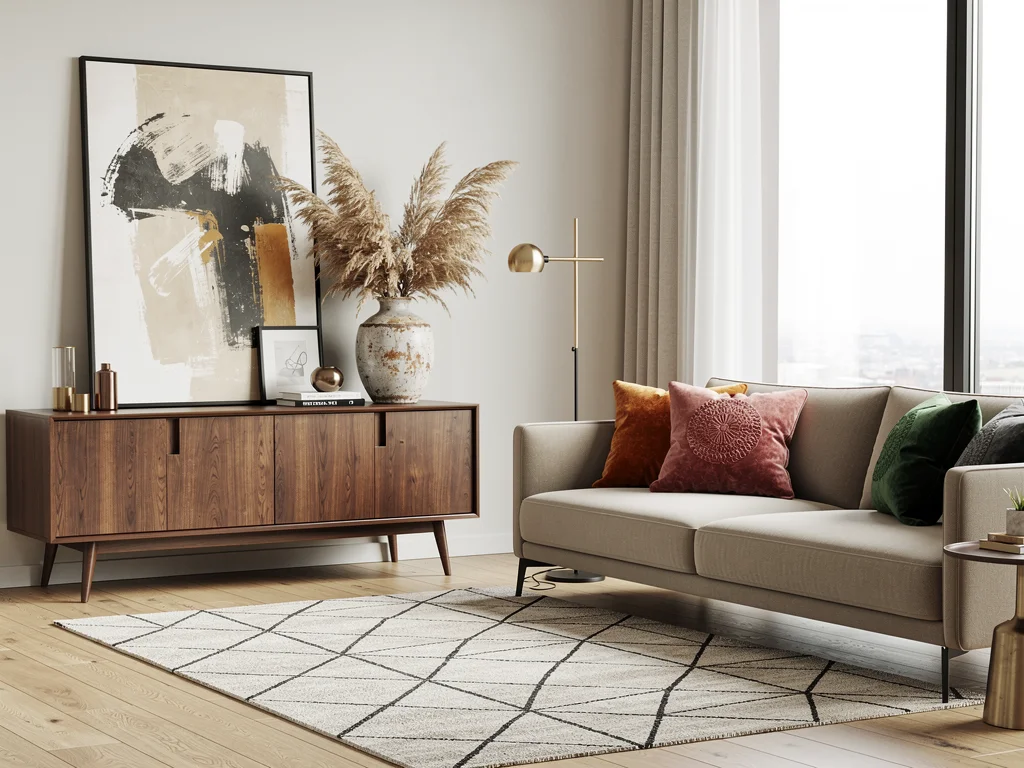
- Accessorize Thoughtfully: Use modern art on a vintage console, or place a vintage lamp on a sleek, modern desk.
- Textural Play: Combine smooth, modern fabrics with rich, textured vintage textiles like velvet or wool.
The art of blending also involves understanding scale and proportion. Ensure that vintage pieces, which can sometimes be larger or more ornate, don’t overpower smaller, more streamlined modern items. Conversely, a delicate modern piece might get lost next to a grand vintage counterpart if not thoughtfully arranged.
Ultimately, blending these styles is about creating a dialogue between the past and the present within your home. It’s an opportunity to tell your story through design, creating a space that feels both current and imbued with character, reflecting a sophisticated appreciation for diverse aesthetics.
Practical tips for a seamless blend in 2026
Achieving a seamless blend of vintage and modern decor requires practical strategies that go beyond theoretical understanding. It’s about making conscious choices in every aspect of your interior design, from selecting furniture to choosing decorative accents. The goal is to create a cohesive and inviting space that feels intentionally designed, not haphazardly assembled.
One of the most effective tips is to establish a dominant style. Decide whether your space will lean more modern with vintage accents or more vintage with modern touches. This helps in maintaining a clear direction and prevents the room from feeling visually chaotic. A 70/30 or 60/40 ratio often works well, allowing one style to be the primary voice while the other provides intriguing counterpoints.
Key considerations for successful integration
When curating your blended space, pay close attention to material consistency. While mixing materials is encouraged, ensure there’s an underlying harmony. For instance, if you have a vintage wooden dresser, complement it with modern furniture that also incorporates wood, perhaps in a lighter finish or a different grain. This creates a visual bridge between the old and new.
Lighting plays a crucial role in tying different styles together. A modern chandelier over a vintage dining table, or vintage table lamps in a contemporary living room, can create an unexpected yet pleasing juxtaposition. Lighting fixtures themselves can be a blend, such as a modern design with a vintage-inspired finish, or vice-versa.
- Start Small: Begin by incorporating one or two vintage pieces into a predominantly modern room, or vice versa, to test the waters.
- Maintain Cohesion: Use a consistent color palette or a unifying element, such as a particular texture or metal finish, to tie diverse pieces together.
- Focus on Scale: Ensure that the sizes of vintage and modern pieces are balanced and don’t overwhelm each other.
- Declutter Regularly: A blended style thrives in a space that is not overly cluttered, allowing each piece to stand out.
- Personalize: Infuse your personality into the decor. The most successful blends reflect the homeowner’s unique taste.
Finally, remember that the most successful interiors are those that feel authentic to the people living in them. Don’t be afraid to experiment and trust your instincts. The journey of blending vintage and modern decor is an iterative process, allowing you to discover what truly makes your house feel like a home in 2026.
Future trends in blended decor (2026 and beyond)
Looking ahead to 2026 and beyond, the blending of vintage and modern decor is set to become even more sophisticated and personalized. The drive towards sustainability and unique expression will continue to fuel this trend, pushing designers and homeowners to explore innovative ways of combining eras. Expect to see a greater emphasis on storytelling through curated pieces, where each item contributes to a rich, evolving narrative within the home.
One significant trend will be the increased integration of smart home technology within vintage aesthetics. Imagine a mid-century modern credenza subtly concealing state-of-the-art entertainment systems, or antique lamps fitted with smart bulbs controlled by voice commands. This seamless marriage of old-world charm with futuristic convenience will define truly cutting-edge blended interiors.
Emerging approaches to mixing styles
The concept of ‘re-edited vintage’ will gain traction, where classic pieces are subtly updated with modern finishes or upholstery to extend their relevance and function. This could involve reupholstering a vintage armchair in a contemporary fabric or giving an antique cabinet a fresh coat of minimalist paint. Such transformations honor the original craftsmanship while aligning with current design sensibilities.
Another exciting development is the rise of ‘global vintage,’ incorporating pieces from diverse cultural heritage into modern settings. This approach celebrates global craftsmanship and history, adding layers of interest and a cosmopolitan feel to contemporary homes. Think of African textiles paired with Scandinavian furniture, or Japanese antique screens alongside minimalist American designs.
- Sustainable Sourcing: A growing preference for vintage and antique items due to their eco-friendly nature and reduced environmental impact.
- Technological Integration: Seamless incorporation of smart home devices into older furniture and fixtures, blending function with form.
- Personalized Narratives: Homes designed to reflect the owner’s unique life story through a carefully selected mix of periods and styles.
- Material Innovation: Experimentation with new, sustainable materials alongside traditional ones to create unique textural contrasts.
- Experiential Design: Creating spaces that not only look good but also evoke specific feelings and experiences through the interplay of vintage and modern elements.
The future of blended decor in 2026 and beyond is bright, promising homes that are not just aesthetically pleasing but also deeply meaningful and reflective of a conscious lifestyle. It’s about creating spaces that are dynamic, adaptable, and continuously evolving, mirroring the complex and fascinating world we live in.
| Key Aspect | Description |
|---|---|
| Vintage Decor | Emphasizes history, ornate details, rich textures, and warm color palettes. Focuses on unique, artisanal pieces. |
| Modern Decor | Defined by clean lines, minimalism, functionality, neutral colors, and innovative materials. Prioritizes clutter-free spaces. |
| Blending Approach | Strategic combination of styles to create cohesive, personalized spaces. Focuses on balance, contrast, and a harmonious narrative. |
| Future Trends | Increased sustainability, smart tech integration, ‘re-edited’ vintage, and global vintage influences for personalized homes. |
Frequently asked questions about blended decor
The primary benefit of blending vintage and modern decor is the creation of a unique, personalized space that reflects individual taste and tells a story. This approach avoids a sterile, showroom feel, resulting in a home that is rich in character, visually interesting, and deeply comfortable, offering both historical depth and contemporary functionality.
Start small by introducing one or two carefully chosen vintage pieces into a predominantly modern room, or vice versa. Focus on statement items rather than too many small accessories. Maintain a cohesive color palette and ensure a balanced scale between the different elements to avoid visual clutter and create harmony.
While there are no strict rules, using a neutral base color palette for walls and larger furniture pieces is highly effective. This allows vintage and modern elements, which often have distinct color schemes, to coexist without clashing. You can then introduce bolder colors through smaller accents, artwork, or textiles from either era.
Functionality is paramount, especially when blending styles. Modern design prioritizes utility, and even vintage pieces should serve a purpose or contribute significantly to the aesthetic. Ensure that your blended space remains practical and comfortable for daily living, as beauty without function can lead to an impractical and unenjoyable environment.
‘Re-edited vintage’ refers to the trend of updating classic vintage pieces with modern finishes, materials, or functionalities. This could involve reupholstering an antique chair in a contemporary fabric, painting an old cabinet in a minimalist color, or integrating smart technology into older furniture, extending its life and relevance in modern homes.
Conclusion
As we’ve explored, the dialogue between vintage and modern decor in 2026 is not about competition, but about collaboration. The seamless blending of these two powerful aesthetics offers an unparalleled opportunity to create homes that are not only stylish and contemporary but also imbued with character, history, and a deep sense of personal identity. By thoughtfully curating pieces, understanding the core principles of each style, and embracing creativity, homeowners can craft spaces that transcend fleeting trends, standing as timeless testaments to design ingenuity and individual taste.